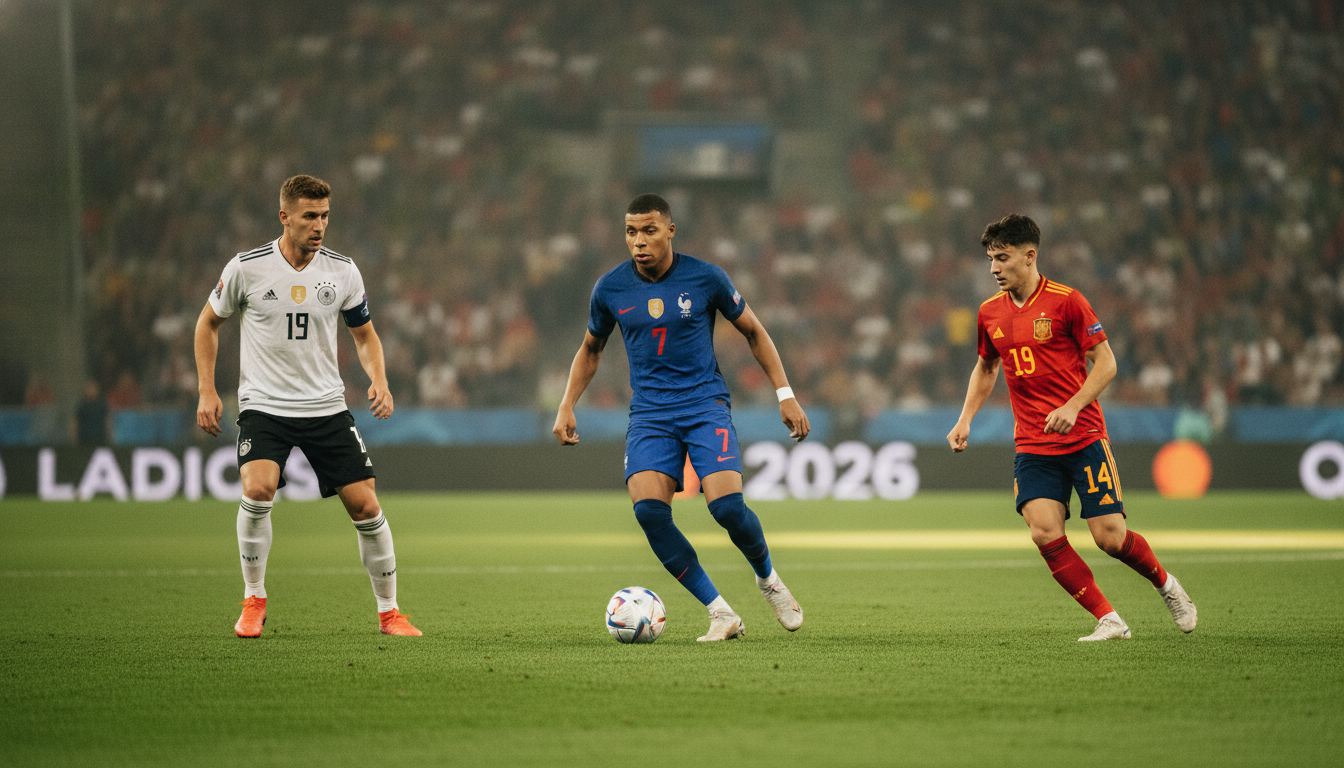
The countdown to the 2026 FIFA World Cup has begun, and Europe's top soccer teams are ramping up their preparations for the qualifying stage. With new tactics, fresh talent, and some revitalized veterans, the continent's traditional powerhouses aim to secure their spot in North America. The upcoming qualifiers promise unpredictable lineups, bold managerial decisions, and thrilling matchups that could reshape the global soccer hierarchy.
France: Youth, Depth, and Tactical Shifts
France enters the qualifiers with a blend of youth and experience, looking to turn its rich talent pool into results. Manager Didier Deschamps is focused on integrating younger players, with midfielders Eduardo Camavinga and Warren Zaïre-Emery joining seasoned figures like Antoine Griezmann. France is increasingly favoring quick transitions and aggressive pressing to utilize Kylian Mbappé's speed and finishing up front. N’Golo Kanté's return to fitness adds defensive stability, while defenders like Wesley Fofana offer flexibility across the back line. Deschamps is willing to adjust formations, making France a tactically unpredictable opponent.
Key takeaways for France fans:
- The midfield will rotate between veterans and emerging stars, balancing experience and energy.
- Fast-paced attacks and high pressing are priorities, with Mbappé at the heart of the offense.
- Look for fluid defensive setups, especially when facing tough opposition.
Germany: New Leadership, New Approach
Germany is rebuilding after their Euro 2024 exit, with Julian Nagelsmann steering the squad in a new direction. The focus is on high-intensity pressing and dynamic attacking. Kai Havertz is set to play a false nine role, flanked by Leroy Sané and Florian Wirtz, while Antonio Rüdiger and Nico Schlotterbeck provide defensive reliability. Joshua Kimmich anchors the midfield, pairing with Jamal Musiala, whose creativity gives Germany a fresh edge. Nagelsmann’s willingness to change formations based on the opponent means Germany’s lineup will rarely look the same twice.
What Germany fans should watch for:
- Frequent tactical adjustments and experimental formations.
- Young players like Musiala are set to play key roles in both attack and midfield.
- Defensive partnerships are crucial, especially as Germany faces top-tier rivals.
Spain: Blending Tradition with Innovation
Spain remains committed to its possession-based style but is evolving under coach Luis de la Fuente. The integration of young stars like Lamine Yamal and Gavi brings fresh energy to the squad. Rodri anchors the midfield, while Dani Olmo injects creativity and direct play. Defensively, Aymeric Laporte leads an organized back line, and goalkeeper Unai Simón’s distribution keeps Spain moving quickly. Their approach now includes a higher defensive line and faster ball progression, making Spain more aggressive than in previous cycles.
Spain’s priorities as qualifiers approach:
- Combining possession with direct attacking moves.
- Relying on teenage talents to complement established veterans.
- Defensive discipline, especially in high-stakes matches.
England: Versatility and Rising Stars
England boasts a deep roster and tactical flexibility under Gareth Southgate. Jude Bellingham has emerged as a midfield leader, giving England the ability to shift between 4-2-3-1 and 4-3-3 setups. Harry Kane remains the focal point up front, supported by exciting talents like Phil Foden and Bukayo Saka. The defense, anchored by John Stones and Ben White, has improved significantly. Southgate’s pragmatic style allows England to adapt on the fly, making them a favorite to advance smoothly through their group.
What sets England apart:
- Bellingham’s influence enables tactical switches during games.
- Multiple attacking options provide unpredictability for opponents.
- Improved defensive chemistry boosts England’s stability.
Key Qualifying Matchups
- France vs Germany: Two teams in transition face off, with Mbappé and Havertz likely to feature prominently. Expect tactical intrigue and fast-paced action.
- Spain vs Italy: Spain’s youthful energy takes on Italy’s experienced defense, setting the stage for a clash of styles.
- England vs Portugal: Cristiano Ronaldo may make his final qualifying appearance, making this matchup especially compelling for both teams and fans.
Players to Watch
- Kylian Mbappé (France): His speed and clinical finishing make him a major threat in every match.
- Jude Bellingham (England): A versatile midfielder who can dictate play and break up attacks.
- Jamal Musiala (Germany): Known for his dribbling and vision, Musiala adds creative spark to Germany’s attack.
- Lamine Yamal (Spain): A teenage sensation capable of game-changing runs and technical brilliance.
Tactical Trends Shaping the Qualifiers
European teams are embracing tactical flexibility, with managers encouraging players to take on multiple roles. Fullbacks often push forward as wingers, midfielders drop deep to support defense, and forwards interchange positions to unsettle opponents. High pressing and rapid transitions are now standard, reflecting influences from club soccer. Spain’s traditional possession game is evolving, while France and Germany adopt more aggressive approaches. These changes are making the qualifiers more unpredictable and challenging for every team.
This tactical evolution also demands deeper squads and more rotation. The congested calendar has forced coaches to manage workloads and injuries carefully, meaning fans may see different lineups from game to game.
Implications for the 2026 FIFA World Cup
The qualifying stage is not just a pathway to the World Cup; it is a laboratory for new strategies and player combinations. Europe’s heavyweights are prioritizing squad rotation, youth integration, and adaptability to stay ahead. The ability to experiment now will help determine which teams are ready for the heightened pressure and competition of the World Cup itself.
Fans can expect intense matches, surprise upsets, and breakout performances as teams compete for coveted spots in North America. The qualifiers are laying the groundwork for what could be one of the most competitive World Cups in history.
What to Expect Next
As the qualifying rounds kick off, European giants face a test of both tradition and innovation. Managers must balance veteran experience with emerging talent, and tactical adjustments will be key to success. The soccer world will be watching to see which teams adapt best, who rises to the occasion, and which stars shine brightest. The stage is set for a dramatic journey toward the 2026 FIFA World Cup.